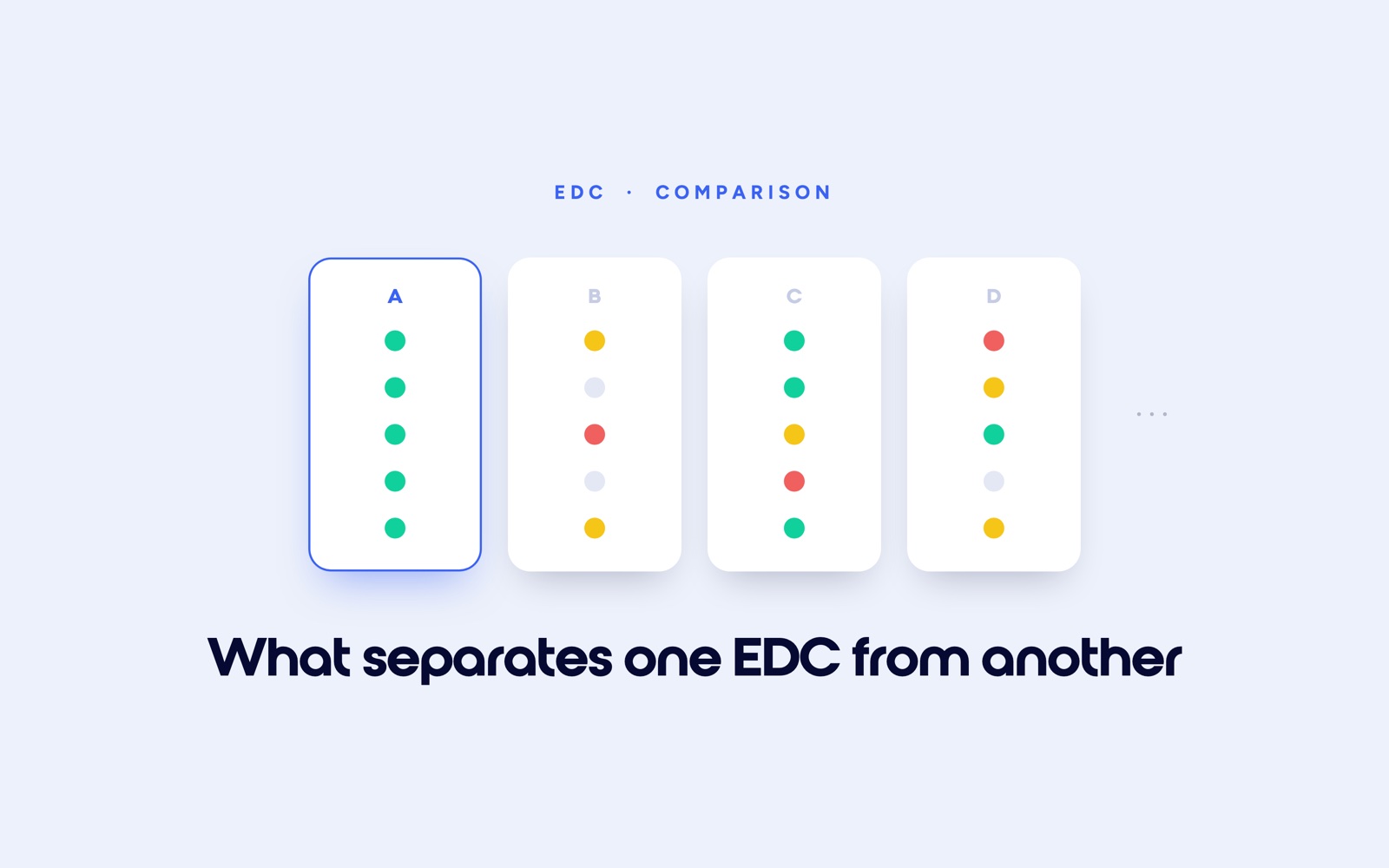
Choosing an EDC software that fits your needs can be complex, given the wide range of solutions available.
Traditionally, researchers have faced a dilemma: either rely on basic tools such as paper and Excel, which are inexpensive but error-prone and difficult to manage, or invest in comprehensive and professional EDC solutions, which are costly but now accessible to a broad range of stakeholders.
While EDC systems were once reserved for large organizations, the market has now diversified to address the needs of structures of all sizes within the clinical research sector. For teams moving off paper collection, we compared Excel and EDC head to head.
To support you in this process, here are the essential features your EDC system must provide. Beyond these technical aspects, the vendor’s expertise and the quality of the support offered are also decisive criteria to ensure the success of your clinical trials.
1. Creation of customized electronic forms
Your EDC software must allow you to easily design eCRF (electronic Case Report Forms) adapted to your study protocols. Give preference to No Code solutions that make it possible to create forms without advanced technical skills. These tools significantly accelerate study deployment and eliminate the need for costly custom developments, while democratizing access to advanced data capture technologies.
Look for an intuitive interface with a wide variety of fields, including text, dates, dropdown lists, checkboxes, and calculations, combined with conditional navigation logic. Above all, the system should allow you to build and test your forms in real time. This level of agility enables rapid iteration on form design without mobilizing technical resources, which is a major advantage for meeting study setup timelines.
2. Data validation and query management system
Automatic data validation is at the core of an effective EDC system. Your solution must integrate a comprehensive mechanism to control and resolve inconsistencies:
Real-time validation (edit checks)
- Automatic consistency checks
- Verification of acceptable value ranges
- Detection of mandatory missing data
- Immediate alerts in case of inconsistency
Query management system
Once anomalies are detected, clinical monitoring requires an efficient query management system. Your EDC platform must automatically generate queries to investigator sites to:
- Clarify questionable data
- Request corrections
- Flag missing data
- Track the resolution of identified issues with full traceability
This functionality enables errors to be detected and corrected at the point of data entry, ensuring high data quality and significantly reducing data-cleaning time.
3. Regulatory compliance
Regulatory compliance is not negotiable in clinical research. Your EDC system must strictly comply with FDA 21 CFR Part 11 requirements as well as major international standards, including:
- FDA 21 CFR Part 11: secure electronic signatures, full timestamping of all actions, complete traceability of modifications, and data integrity and authenticity
- ISO 27001 security and traceability: guarantees the protection of information and full traceability of access and modifications
- ICH GCP R3 compliance: adherence to Good Clinical Practice in its latest version
- CDISC data standardization: compatibility with CDISC standards, including CDASH, SDTM, and ADaM, to facilitate regulatory submissions
4. User management and access control
A robust user and access management system is essential to secure your clinical data. Your EDC solution must offer:
- Assignment of specific roles such as investigator, coordinator, and monitor
- Granular access control by subject or by investigator site
- Secure authentication mechanisms
- Management of access delegations
5. Complete audit trail
Traceability is fundamental to regulatory compliance. Every action performed within your EDC system must be recorded with:
- Precise date and time
- User identification
- Nature of the modification
- Value before and after modification
- Reason for the modification
6. Standardized data export and data interoperability
Your EDC system must support data export in industry-standard formats:
- SAS datasets for statistical analysis
- Excel and CSV formats for ad hoc analyses
- PDF for archiving and documentation
- A modern REST API that integrates seamlessly with your other systems (CTMS, eTMF, pharmacovigilance, ERP…) is essential to a modern, scalable IT architecture.
Important complementary features
Real-time dashboards
Instant visualization of study progress, recruitment rates, and data quality indicators by investigator site.
Multilingual support
Essential for international studies, with full adaptation of forms and interfaces across multiple languages.
User interface and site experience
A modern, intuitive, and responsive user interface is critical to maximize adoption by investigator sites. Solutions with outdated interfaces represent a significant barrier to investigator engagement and study recruitment.
How to evaluate these features?
The cost and scale of your clinical studies largely determine your EDC requirements. Look for solutions that align with your operational reality: functional without being oversized, professional without exceeding your budget.
Features are one dimension of the decision. For the full selection method, from requirements to the build walkthrough, see how to choose an EDC for your clinical trial.
Checklist for vendor demonstrations
1. Security and compliance
- ISO 27001 and HDS France, where applicable, FDA 21 CFR Part 11 validated
Question: “Can you provide your certificates and system validation documentation?”
2. Configuration simplicity
- Intuitive No Code interface
Practical test: “Can you walk us through building a form on a section of our protocol?”
3. Role management and traceability
- Granular rights by profile, including investigator, monitor, and data manager
- Complete audit trail covering all actions
4. Data export
- Standard formats including SAS, CSV, Excel, and PDF
- CDISC standards CDASH and SDTM
5. Integration
- REST API to connect with your existing tools, such as CTMS and eTMF
6. Usability
- Modern and responsive interface
- Test: “Can my team test the system directly?”
At Datacapt, we address this need by offering No Code EDC solutions that democratize access to advanced electronic data capture technologies. This approach enables a wide range of clinical research stakeholders to access professional-grade tools without sacrificing ease of use.
Before being attracted by advanced features, make sure your solution fully masters these fundamentals through a simple and intuitive approach. An EDC system that excels in these essential areas while remaining accessible will be a major asset for the success of your clinical trials.
Do not hesitate to request personalized EDC demonstrations using your own study protocols to validate that the solution truly meets your specific operational needs.


Florentin combines clinical research know-how with a true passion for product design. Attentive to detail and obsessed with user experience, he ensures that Datacapt remains a high-performance platform that’s also intuitive and accessible to every user.
Blog & News Datacapt
News, Articles, Resources et Tutorials.